Many people embark on a vegetarian journey with the best of intentions: to lose weight, cleanse their blood vessels, and bring their cholesterol levels under control. Yet, reality can sometimes play a cruel trick. Seeing arrows on a medical report pointing *up* instead of down regarding blood lipids often leaves vegetarians baffled. “Was there a mistake in the test?” No, the equipment is precise. “Is my body constitution unique?” No, you might simply be “doing vegetarianism wrong.” The truth behind this is far more complex than the simple equation “meat equals high cholesterol.” To solve this mystery, we must first understand the “key player” involved: cholesterol. What role does it actually play in our bodies?
I. The “Double Life” of Cholesterol
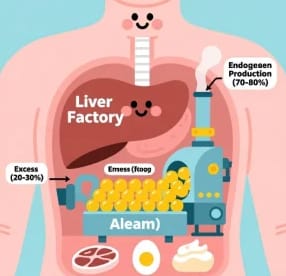
We often view cholesterol as something “bad,” but in reality, it is a vital building block for life—an essential raw material for constructing cell membranes, synthesizing hormones (such as sex hormones), and producing Vitamin D and bile acids. The crucial point is that it has a “dual origin” that many overlook: exogenous cholesterol (accounting for about 20–30%), which is the type we “consume” through food—primarily animal products like meat, egg yolks, and cream; and endogenous cholesterol (accounting for about 70–80%), which is synthesized internally by our body’s “chemical plant”—the liver. This means that even if you are a strict vegetarian who completely eliminates exogenous cholesterol intake, your liver will still diligently “go to work” producing it to meet the body’s basic needs.
II. Three Major “Traps”—Unveiling the Reality of “Problematic Vegetarian Diets”
Your vegetarian plate may harbor “invisible killers” that cause your blood lipid levels to skyrocket. Let’s identify these three common “traps.”
Trap 1: The “Oil Assassin”—Hidden fats in cooking. To achieve a rich, smooth, or crispy texture, many vegetarian dishes end up becoming “oil sponges” during the cooking process. Deep-fried soy products, vegetarian meatballs, vegetarian chicken nuggets, and dishes heavily seasoned with peanut or sesame paste contain excess fats that the body converts into triglycerides, directly raising blood lipid levels.
Trap 2: “Sugar-Coated Shells”—The sweet trap of high-sugar vegetarian diets. When meat is absent from the table, people often unconsciously increase their intake of staples and sweets to feel full. White rice, refined noodles, pastries, dried fruits, and candied fruits—these refined carbohydrates and added sugars cause rapid spikes in blood glucose, with excess sugar converted into fat and stored in the liver. Research shows that high-sugar diets are a major cause of dyslipidemia (abnormal blood lipid levels), and such “high-sugar vegetarian diets” can often cause blood lipid levels to skyrocket even more than meat-based dishes.
Trap 3: “Meat-Mimicking Illusions”—Over-processed foods masquerading as “healthy.” Popular market items like “vegetarian chicken,” “vegetarian duck,” and “vegetarian steak” may appear healthy, but to mimic the texture and flavor of meat, they are loaded with vegetable oils, salt, sugar, thickeners, and flavorings during processing. Long-term consumption not only raises blood lipid levels but may also increase metabolic risks such as hypertension and insulin resistance.
III. Long-term vegetarianism may also lead to “nutritional imbalance”
A long-term, poorly planned vegan diet (excluding all animal-based foods) can lead to nutritional imbalances and indirectly cause metabolic disorders, acting as an “accomplice” to high blood lipids.
1. Insufficient high-quality protein
Protein serves not only as the body’s “building material” but also as a component of the “trucks” that transport fat—apolipoproteins. A lack of high-quality protein (primarily from beans, eggs, and dairy) can paralyze the fat transport system, leading to disordered lipid metabolism.
2. “Imbalance” of essential fatty acids
Animal fats contain necessary saturated fatty acids and cholesterol; moderate intake helps maintain the stability of hormones and cell membranes. A complete lack of these nutrients can actually trigger the liver to synthesize more cholesterol as a compensatory measure. 3. Deficiencies in Vitamin B12, iron, and zinc
Most of these nutrients are found in animal-based foods; a deficiency directly affects liver metabolism and indirectly impacts blood lipid levels.
IV. Scientifically Managing Lipids: It’s Not About “Whether to Eat Meat,” But “How You Eat It”
1. Smart Eating
Eat more: Whole grains, oats, legumes, nuts, and fresh vegetables and fruits. These foods are rich in dietary fiber, which helps bind cholesterol and promote its excretion. Eat less: Fried foods, refined carbohydrates (white rice and flour products), sweets, and processed vegetarian foods. Limiting salt, sugar, and oil—while minimizing seasonings and processing—is the best “secret” to lowering lipid levels.
2. Energetic Exercise
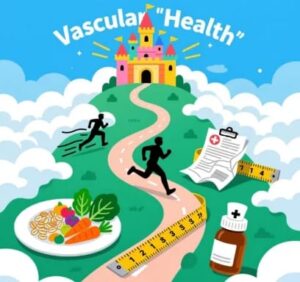
Exercise acts as a natural “lipid-lowering medication” and a “vascular cleanser.” It directly burns energy and reduces fat accumulation; it raises levels of “good cholesterol” (high-density lipoprotein cholesterol) and lowers “bad cholesterol” ( …low-density lipoprotein cholesterol (LDL-C). Recommendation: At least 150 minutes of moderate-intensity aerobic exercise per week (brisk walking, swimming, cycling, etc.); break up sedentary time by getting up and moving for 5 minutes every 1–2 hours of work.
3. Weight Management
Obesity is closely linked to abnormal blood lipid levels. Pay particular attention to abdominal obesity and waist circumference (target: <90 cm for men, <85 cm for women), as this is a direct indicator of visceral fat levels. Aim to keep your Body Mass Index (BMI) within the ideal range of 18.5–23.9.
4. Regular Health Check-ups
Do not let your guard down just because you follow a vegetarian diet. An annual comprehensive lipid panel is recommended—checking total cholesterol, triglycerides, high-density lipoprotein cholesterol (HDL-C), and low-density lipoprotein cholesterol (LDL-C). Individuals with a family history of hyperlipidemia, hypertension, or diabetes should be especially vigilant.
5. Adhere to Medical Advice on Medication
For those with hereditary hyperlipidemia or those unable to reach target lipid levels through lifestyle interventions alone, medication is an essential tool for protecting blood vessels. Examples include statins (atorvastatin, rosuvastatin, etc.), ezetimibe, and PCSK9 inhibitors. Always adhere to long-term, standardized treatment under a doctor’s guidance; never stop taking medication or reduce the dosage on your own.
V. There is nothing wrong with being vegetarian; the key is the “scientific” approach
A vegetarian diet is a healthy lifestyle choice, but “vegetarian” does not automatically mean “low-fat” or “safe.” What is truly beneficial is a “scientifically planned vegetarian diet.”
✔ Focus on a balanced diet consisting of natural, minimally processed foods
✔ Ensure a balanced intake of protein, fat, and carbohydrates
✔ Limit oil, sugar, and salt intake
✔ Combine with regular exercise and health check-ups.
Adopting a vegetarian diet is a healthy choice worth encouraging, but it is not a “universal shield” against health issues. An ill-conceived vegetarian diet—much like an unhealthy omnivorous one—can drive up blood lipid levels. Therefore, the key to health lies not in whether or not one eats meat, but in whether the diet is scientifically sound and balanced. Let us learn to be smart about vegetarianism: making “light” meals nutritious and living a “healthy” lifestyle with a balanced rhythm—this is the true essence of safeguarding vascular health.